Cross-
Cutting
Research Area
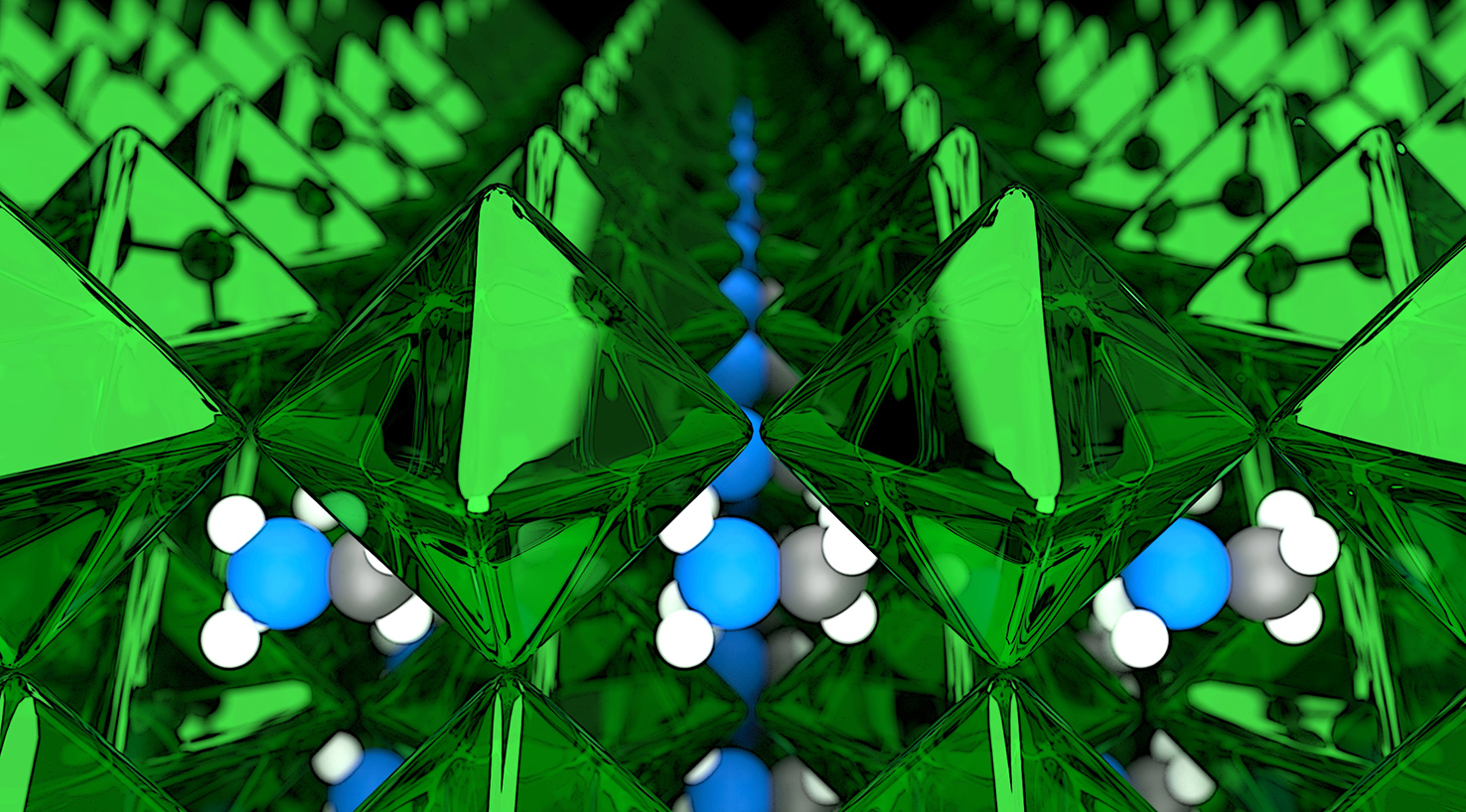
Designing new materials, atom by atom
Combining the power of quantum mechanics and high-performance computing to predict materials’ properties at the atomic scale.
Computational Quantum Mechanics Applied to Materials
What is Computational Materials Science?
The predictive accuracy of computer-aided simulations of materials is evolving rapidly to become an essential tool in materials science research. Well-established theories, implemented into highly efficient software, running on the world’s fastest supercomputers, provide unprecedented opportunities to explore the vast landscape of atomic configurations by which novel materials can be formed. This has the potential to greatly accelerate the characterization, optimization and discovery of new advanced materials for renewable energy, efficient lighting, next generation electronics and quantum computing.
Current research areas
Research is multifaceted, ranging from foundational advances in theory, methods and algorithms, to real-world impact in grand challenge problems.

Microscopic characterization of structural, electronic, optical and transport properties of advanced materials

Energy materials: solar cells, energy-efficient lighting

Materials for power electronics: ultra-wide band gap materials

Nanomaterials: 2D materials and their heterostructures

Database driven search for new magnetic materials without rare earth elements

In-silico high-throughput materials screening
Working with partners
Current partnerships include collaborations with the group of Prof. Li Shi at the UT Department of Mechanical Engineering, the group of Prof. Chih-Kang Shih at the UT Department of Physics, the group of Alex Demkov, Dr. C.Z. Wang at Iowa State and Profs. Dave Sellmyer and Xiaoshan Xu at the University of Nebraska (collaboration details).
Centers and Groups
To learn more about projects and people in Computational Materials, explore the centers and groups with research activities in this cross-cutting research area.
News in brief
News
Jan. 26, 2026
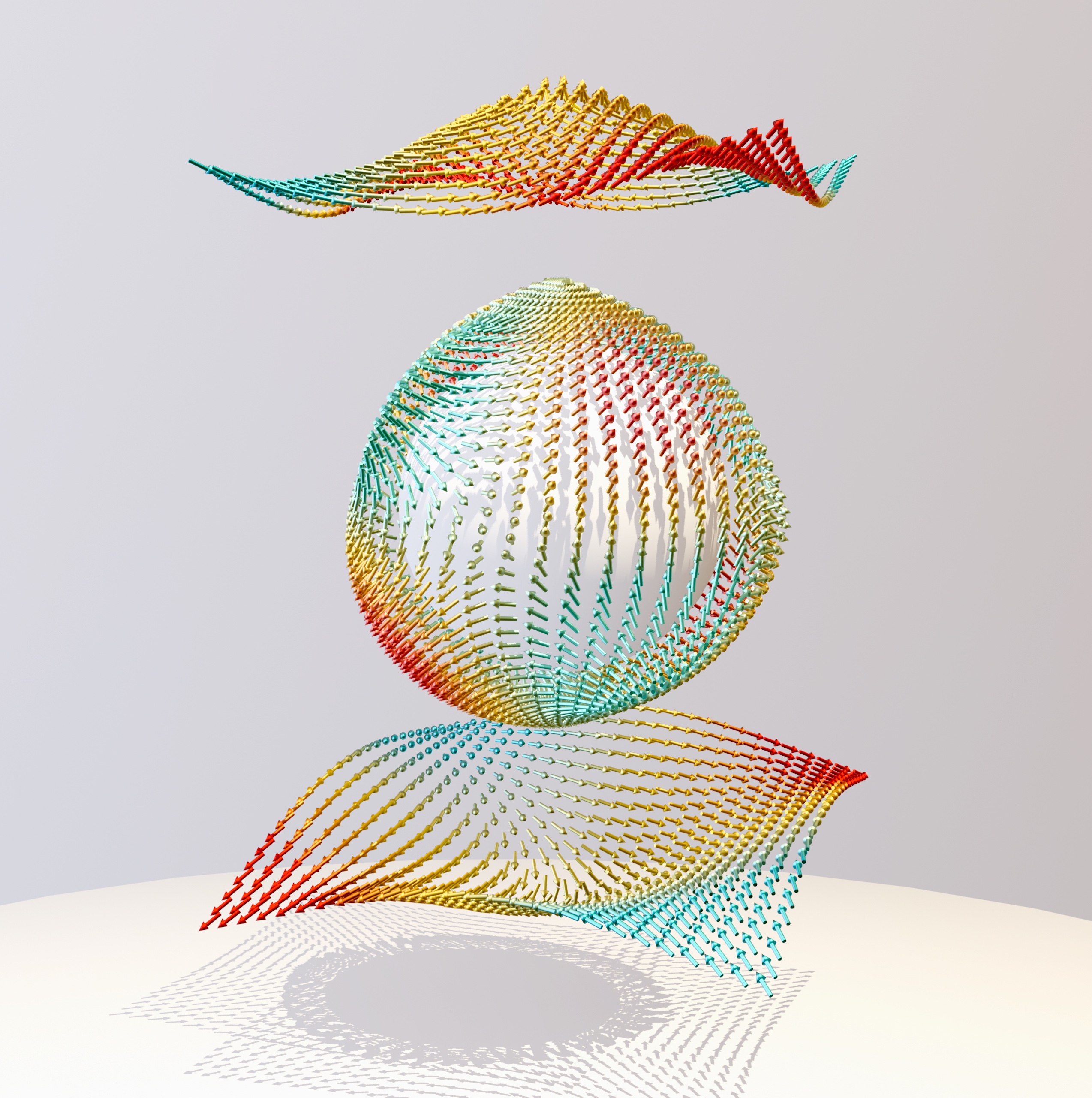
New PNAS Study Reveals Hidden Topological Structure in Polarons
A new PNAS study led by Oden Institute researchers reveals that polarons in crystalline materials can carry stable, symmetry-protected swirling atomic patterns, uncovering hidden structure that reshapes how scientists understand charge and energy transport in technologies like solar cells, LEDs, and electronic devices.

News
Jan. 6, 2026
Antonios Alvertis Joins UT Austin to Advance Quantum Materials and Computational Physics
Antonios Alvertis joins The University of Texas at Austin in Spring 2026 as an assistant professor with a joint appointment in the Oden Institute for Computational Engineering and Sciences and the Department of Physics. A theoretical physicist, Alvertis combines high-performance computing and quantum computing to study quantum materials at the atomic scale, with applications ranging from superconductors to energy-efficient devices.

News
April 16, 2025
Feliciano Giustino Among 3 UT Faculty Named as Guggenheim Foundation 100th Class of Fellows
Feliciano Giustino, a physicst and Oden Institute Principal Faculty member, is one of three UT faculty among this year’s named Guggenheim Fellows.