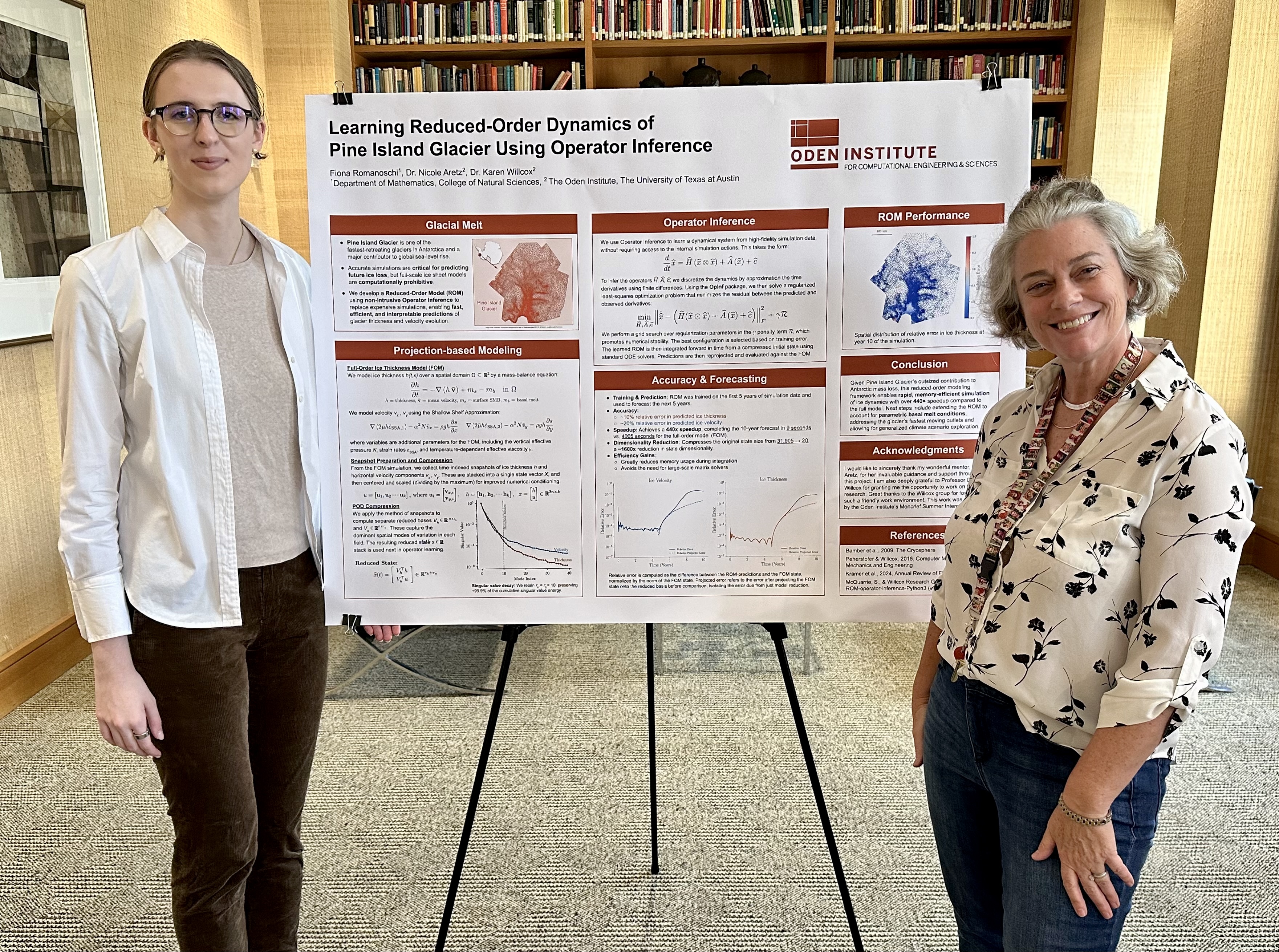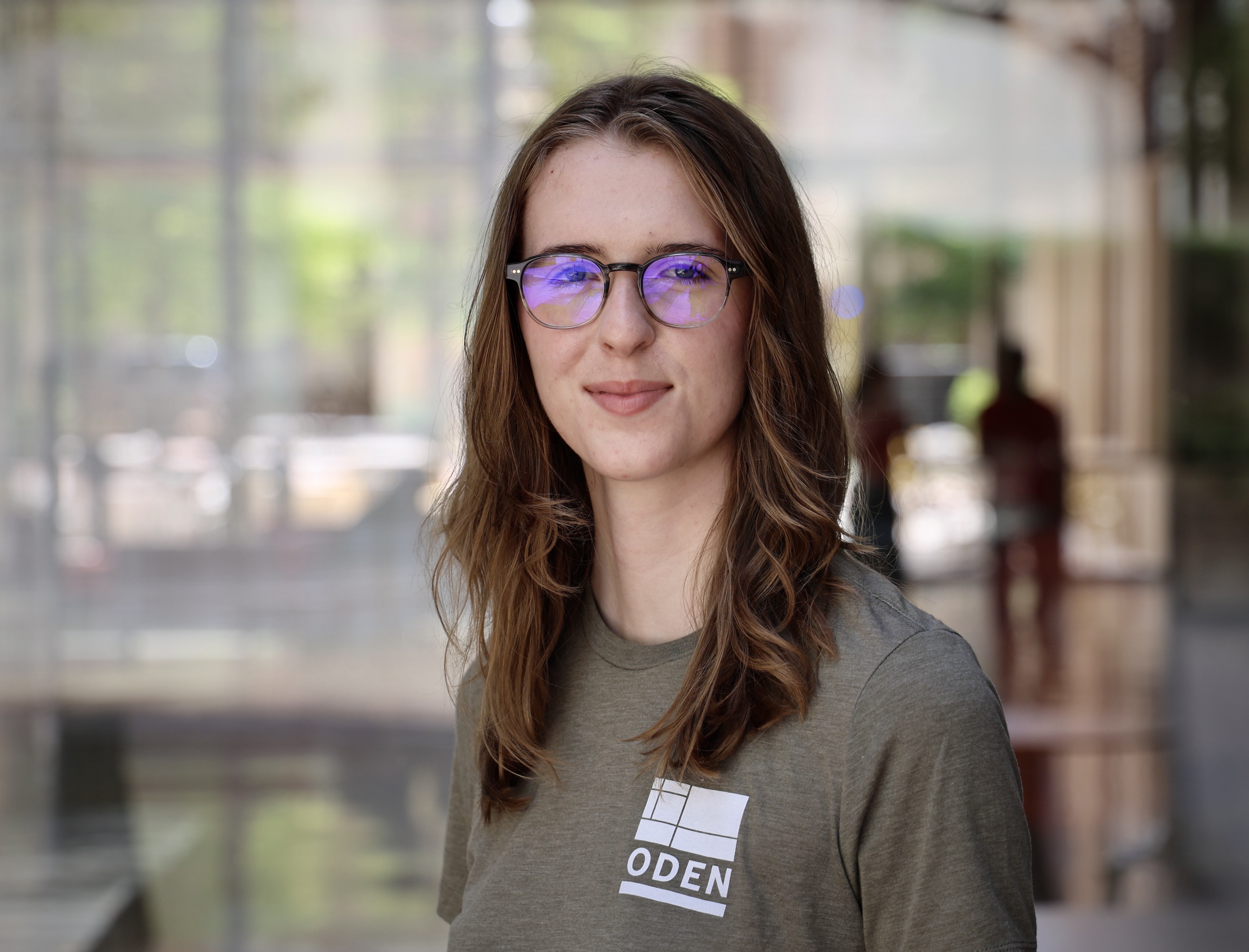
Simulating the movement of a glacier can mean tracking tens of thousands of variables over time. For fifth-year University of Texas at Austin student Fiona Romanoschi, the challenge is figuring out how much of that complexity can be reduced while still capturing the system's essential behavior. In her research at the Oden Institute for Computational Engineering and Sciences, she develops smaller mathematical models that can approximate the dynamics of ice sheets at a fraction of the original computational cost.
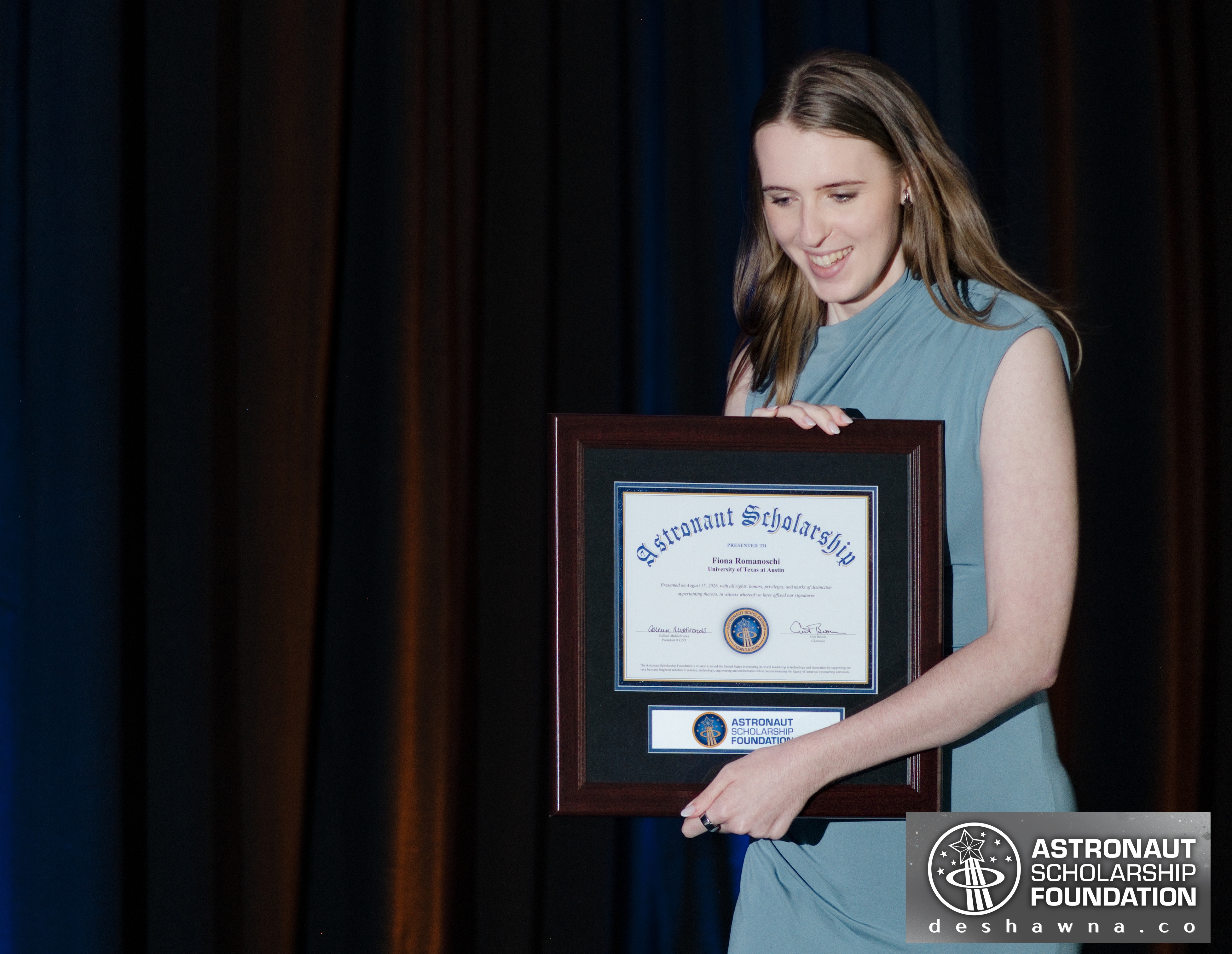
As Fiona prepares to graduate from UT in Spring 2027 with degrees in Informatics and Mathematics, a minor in Scientific Computation and a certificate in Computer Science, she is completing undergraduate research projects and applying to Ph.D. programs in computational science and statistics. Her interests have developed through a variety of research experiences, from statistical forecasting of political violence to computational modeling of glaciers, along with the guidance of mentors across several institutions.
Growing up in the Dallas area as the daughter of immigrants, Fiona initially envisioned a future in medicine. During high school, she participated in research programs focused on medical applications and regenerative medicine, including New York University's GSTEM with the Courant Institute and Stanford’s STaRS programs. Those experiences introduced her to scientific research and encouraged her to think more seriously about the methods used to investigate scientific questions.
Her high school statistics teacher was particularly influential in shaping those interests. "She wouldn't let me come to office hours without a specific question," Fiona recalled. "She always reminded me that asking specific questions helps other people understand how to help you, but it also forces you to think more carefully about what exactly you don't understand."
Outside the classroom, Fiona was also drawn to educational videos exploring mathematics and computation, including the YouTube channel 3Blue1Brown and a documentary about AlphaGo, the artificial intelligence system developed by Google DeepMind that famously defeated a world champion in the game Go. Together with her early research experiences, these influences encouraged her to explore how mathematics and computation could be used to understand complicated problems.