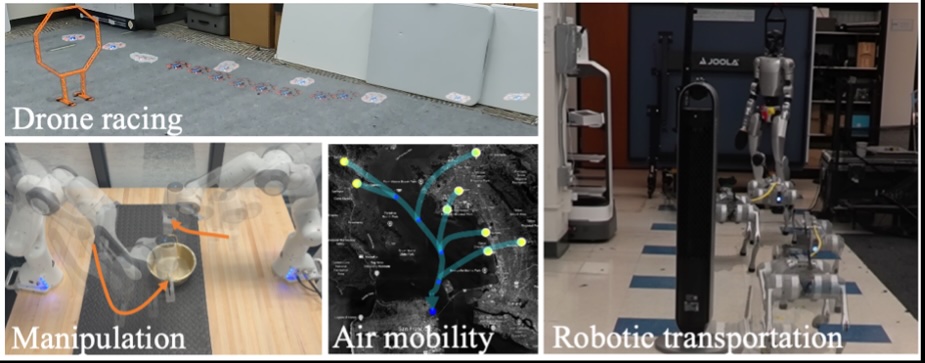
Oftentimes, coordination between people is not spoken out loud. For example, envision two people moving a table through a doorway. As they maneuver, each person slows down and adjusts positions naturally by feeling each other’s movements. Moments like these leave Peter O’Donnell, Jr. Postdoctoral Fellow Jingqi Li wondering whether a robot could ever do the same: read intentions the way people do, noticing obstacles and signaling its own plans back without being told.
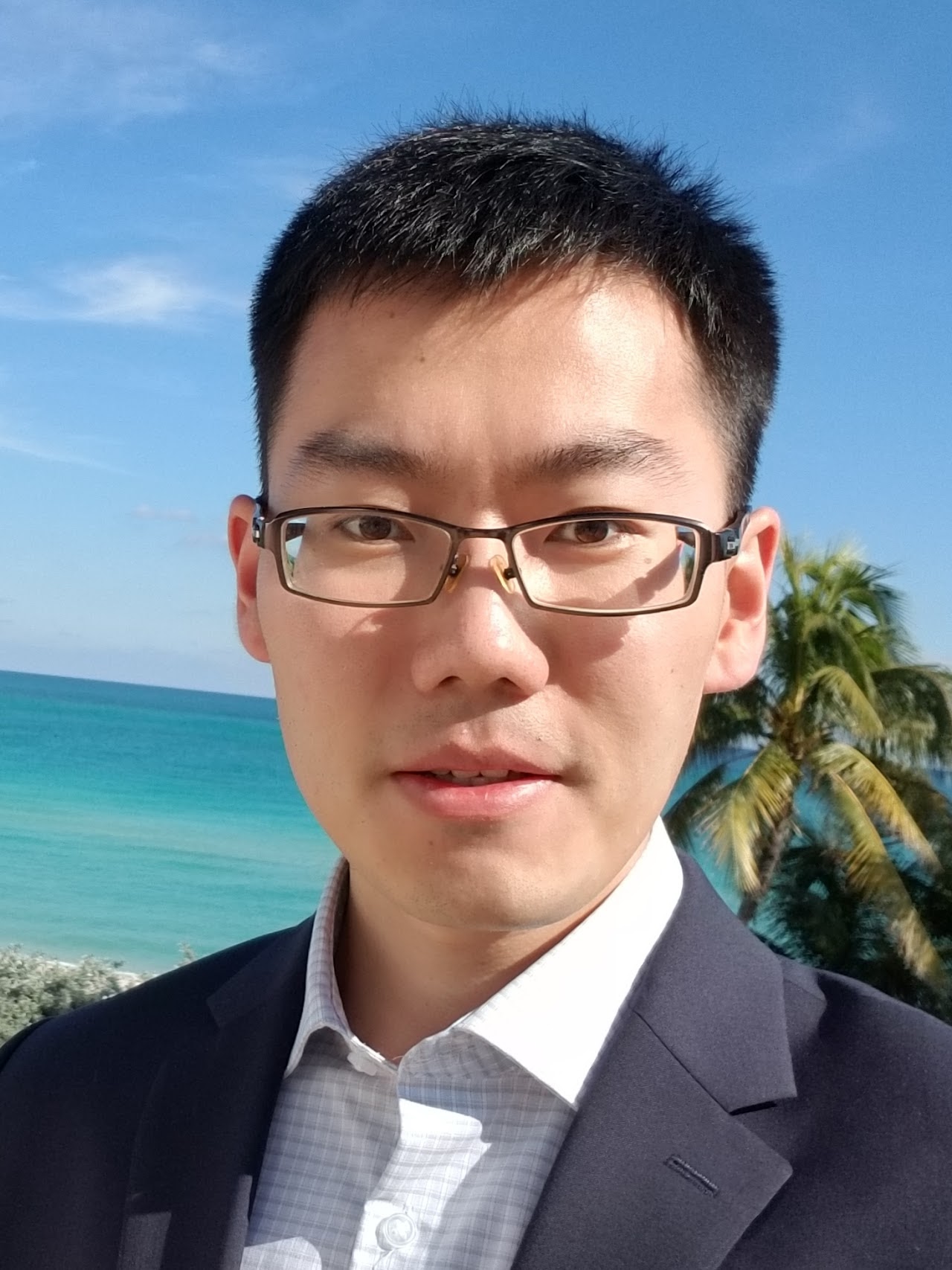
The question of how machines coordinate as naturally as people do sits at the heart of Li's work as a second-year Fellow in the Center for Autonomy at the Oden Institute for Computational Engineering and Sciences, where he works with David Fridovich-Keil, Oden Institute core faculty member and assistant professor of aerospace engineering & engineering mechanics.
Li was trained in optimization, control theory and machine learning, and he was drawn to research by problems where mathematics could explain how complex systems behave. While earning his Ph.D. at the University of California, Berkeley, which he completed in 2025, he became especially interested in autonomous systems that make decisions while interacting with others. This led him toward game theory, optimization, and deep reinforcement learning as tools for understanding strategic interactions.
Today, his research asks how autonomous systems should act when the other decision makers around them have goals, information, or future plans that are uncertain. Self-driving cars offer the most intuitive example. "A self-driving car has to anticipate whether another driver will yield, merge, or behave unexpectedly while still making safe and efficient decisions itself," Li said. Researchers call these decision makers agents, a category that can include a self-driving car, a robot, a generative language model, or a human driver. He develops algorithms that help agents anticipate one another, learn from those interactions, and act safely in response.
The hard part, he says, is making the strategic reasoning computable when many agents are interacting, each learning as it goes and each acting with an incomplete picture of the others. Researchers still need to understand what information agents really need about one another, how accurately they have to predict each other's behavior, and how safety guarantees can hold up as interactions grow more complex. "I am especially interested in uncovering the mathematical structure that makes these otherwise difficult problems tractable," he said.