University of Texas at Austin

News

Del Valle High School Students Visit Oden Institute for Hands-on Robotics Experience

Published April 20, 2026

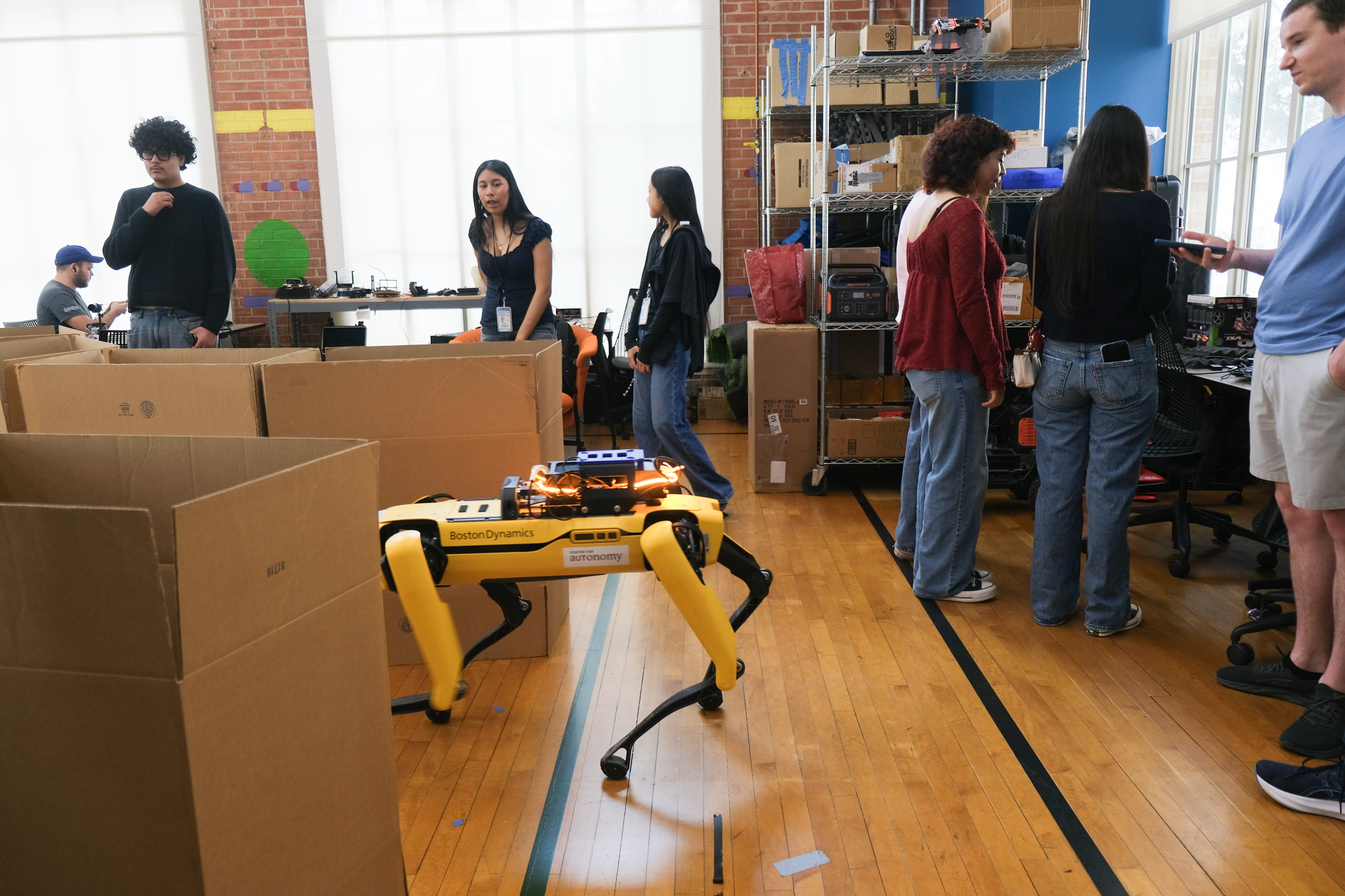
A quadruped robot navigates an obstacle course during the hands-on robot demos, where students take turns guiding robots with remote controls. Credit: Tai Cerulli/Oden Institute

On March 3, students from Del Valle High School stepped onto the campus of The University of Texas at Austin for a day that traded routine classroom lessons for discovery in motion. Hosted by the Oden Institute for Computational Engineering and Sciences, the visit immersed them in the world of robotics and computational science through hands-on demonstrations that turned abstract concepts into something they could see, touch, and test.

Built into the spring semester, the field trip is a component of the year-long AutoDriveLab Internship. The program is operated by the Oden Institute’s Center for Autonomy in partnership with the Del Valle Independent School District (DVISD). Funded by the Army Educational Outreach Program (AEOP), the program pairs 30 high school students with UT graduate students and postdoctoral mentors to design, build, and program autonomous vehicles from the ground up. After a fall semester focused on understanding and assembling hardware and building circuit designs, the spring semester shifts to software and autonomy. The March visit placed students inside labs where ideas are born and brought to life.

Students broke out into two groups that rotated between two stations: a hands-on robot demonstration, and a combined lab tour and “Line Following Checkpoint” lesson within the internship curriculum.
block.caption

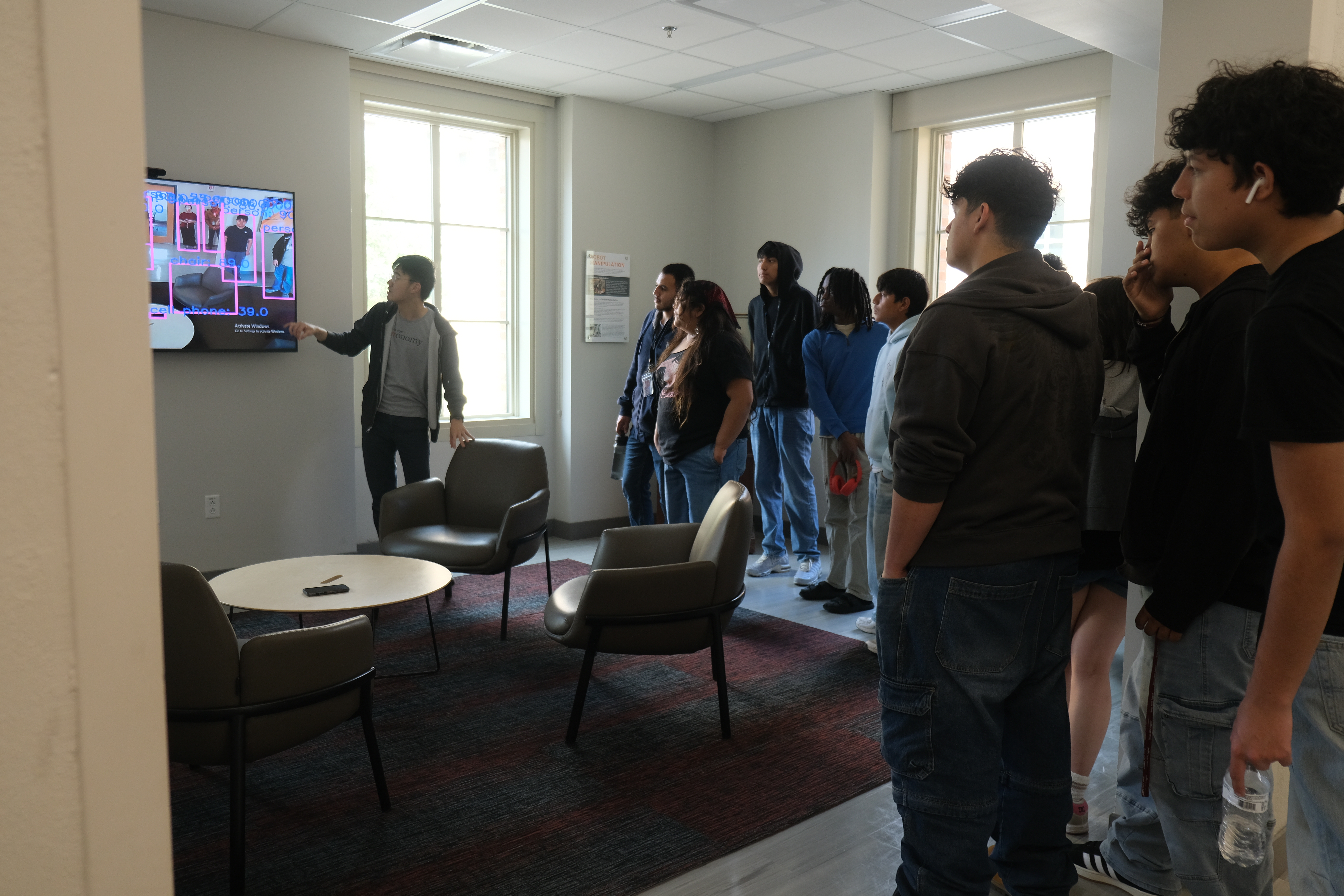
Po-han Li demonstrates a computer vision system that detects and tracks objects in real time using bounding boxes, illustrating how robots perceive and interpret their surroundings. Credit: Tai Cerulli/Oden Institute

At the robot demonstration station, students took turns using remote controls to guide robots through an obstacle course built indoors, engaging directly in experimenting and observing the machines’ real-time responses. The demos continued outdoors, weather permitting. Through these interactions, students began to grasp the functionality of the robots through trial and error: adjusting inputs and observing outcomes.

The second station served as a structured lesson within the internship curriculum, called “Line Following Checkpoint,” which focused on how robots use sensors to navigate their environment. The field trip was built directly on classroom prep from the previous week.

“Last week, students explored sonar, lidar, and IR sensors and learned how robots perceive their surroundings,” said Po-han Li, a Ph.D. candidate in electrical and computer engineering who helps develop the program. “During the field trip, they apply that prep and learn how to use those sensors for feedback control.”

Working in groups at Anna Hiss Gym, students programmed small RC cars equipped with infrared sensors to follow a taped path on the ground. The activity began with an open-loop model, where both motors received the same command but the vehicle drifted off course. Students then implemented a feedback-based approach, allowing the car to adjust its steering in response to sensor input and correct its path in real time.

“They see immediately that identical code does not guarantee straight motion without feedback,” Li explained. “The car visibly corrects itself as it drives, demonstrating closed-loop control in action.”

In addition to the programming component, students participated in a “Human vs. Machine” challenge, comparing manual control with autonomous navigation and highlighting key ideas in robotics, including consistency, error correction, and real-time decision-making. The campus visit concluded with lunch and an opportunity for a question-and-answer discussion.

The partnership between the Center for Autonomy and Del Valle High School, which began with a research grant in 2021, has gained traction over the last five years, growing from a proposed summer opportunity for two students into a full year-long internship for an entire classroom.

The partnership with DVISD now includes a defined calendar of short courses, site visits, and internship opportunities.

— Ufuk Topcu

“The partnership with DVISD has grown, and the Center’s commitment to outreach continues to strengthen,” said Ufuk Topcu, Director of the Center for Autonomy and professor of aerospace engineering and engineering mechanics at the Cockrell School of Engineering.

That momentum is set to continue. According to Meredith Albers, Technical Project Manager for the Center for Autonomy, the program was recently awarded additional grant funding for student stipends.

“The plan is to continue it, refine it, and make it a stable part of how we connect local high school students with real robotics research,” Albers said. “Plus, we were awarded more grant funding for student stipends.”

The AutoDriveLab cohort will close out the spring semester with a final showcase in May, where students will demonstrate their constructed vehicles operating autonomously on courses designed to test navigation accuracy, obstacle avoidance, and system reliability.

By connecting classroom learning to hands-on application, the internship helps bring into focus how concepts in robotics and computational science translate into real-world impact — and, for a growing number of Del Valle students, into a concrete pathway from high school into university-level research.